Good News for the Soul

A women's health blog for mid-life women learning how to manage their health and their life.

Category: Mental Health

  • What you must eat to maintain your brain’s health

         Let’s face it-we all are getting older.  As we age, our cognitive function starts to as well.  So in order to keep our minds sharp, we have to be mindful of what we are putting in our bodies.  It’s no secret that our diet plays a huge role in our brain’s health.  So what are the best foods to consume in order to keep our brain’s health intact?  Here are the just some of the best foods for brain health.

         Leafy greens – Foods such as spinach, kale and Swiss chard are nutritional in maintaining your brain’s health.  Eat them six times a week or incorporate them into your smoothie or pasta sauce.

    Beans are good examples of foods that help maintain your brain’s health.

         Berries – Polyphenol-packed fruits such as blueberries, blackberries and cherries are beneficial in eating at least twice a week.  Eat these fruits twice a week or blend them in your protein shakes, toss them in your salad and oatmeal.

         Nuts – Eating all nuts like pistachios and walnuts are great sources of protein and they help lower elevated blood pressure. They also guard against Type 2 diabetes, risk factors for memory loss and Alzheimer’s disease. Eating a small handful of them at least five times a week could do your mind good.

         Beans – Whether it is kidney beans or black beans, nutrients such as folate and low-glycemic carb are beneficial in maintaining your brain’s health. Eating these as well as chickpeas and lentils are great in lowering blood pressure and cholesterol.

        Those are some of the foods you must include in your diet to maintain your brain’s health. We are what we eat.  So take care of your brain and eat the right foods to maintain its health. For more information on maintaining your brain’s health, look up the article, “What to eat for brain health as you age” on www.theglobeandmail.com.


  • Four Ways to Improving the Quality of your Sleeping

    It’s something we can’t say enough about-sleep is very important for the body’s overall function. Without sleep, how will we function in our day-to-day lives?  How will our brains function when we’re at work or school?  Yes, getting enough sleep is very important for our own well-being.  But if we haven’t been getting enough sleep as we should be getting, how could we improve in this avenue? Here are four ways to doing so.

    The first and obvious way to improve your sleep is to change your mattress.

    Having trouble sleeping lately? Follow these tips to improving it.

    This is something that we all must do. If your mattress is looking rusty and out of shape, it could have a detrimental effect on your sleep and your body. Experts recommend that people change their mattresses at least once every ten years.

    Here’s another way of improving your sleep that I didn’t know about – stop snoozing your alarm clock. Yes, hitting the snooze button all the time could erode the quality of your sleep. According to the HealthiGuide article, “8 Things You Do that Ruin Your Sleep,” when you hit that snooze button every time your alarm clock goes off, your sleep is broken down into fragments and the body never truly reaches the state of rest, leaving you groggy for the day.

    The next way is also important and if we don’t put it down, it will damage our sleep quality.  What I am referring to is of course, our smart phones.  The HealthiGuide article mentions the fact that electronic devices emit blue light which can block your body from producing melatonin. Melatonin is a hormone that helps us fall and stay asleep.  So to prevent this from happening, try not using your phone for at least ten minutes before bed.

    The fourth and final way to improving your sleep is to put some footies on those cold feet of yours.  Most people prefer to warm their naked feet inside a cover or a blanket.  But if you try wearing socks or footies while you sleep your blood vessels will dilate.  This also makes it easier for you to fall asleep faster.  So during this winter season, be sure to keep your feet warm while you’re sleeping.

    There are other essential ways to improving your sleep, like reducing your caffeine and alcohol consumption. But these ways are practical as we all continue to seek ways to improve our sleep quality.  For more information on the article, “8 Things You Do that Ruin Your Sleep,” visit www.healthiguide.com.

  • Traveling-A refreshment for your health

    I just came back from a beautiful week long vacation in New York. Not only was it fun and exciting, it was relaxing as well. Sometimes it’s good for all of us to get away sometime.  Vacations and nice trips refresh and recharge the mind.  When I started this blog, one of my earlier posts was dedicated to traveling and its benefits for the health.  I like to revisit that post a little bit and share more benefits to taking a one-week vacation every now and then.

    View of Times Square from my trip in New
    York last week.

    When some employees come back from a short vacation, they tend to feel more energized and rejuvenated in their jobs.  This is because traveling helps in taking your mind off the stress and humdrum of your everyday life.  I brought out in my previous traveling article that taking some time off allows the mind to expand and become less stagnant.  My trip last week was educational and encouraging for my mind.

    Traveling is not only good for your mental well-being.  It’s also helps in leading a proactive lifestyle.  Some people go on hiking or bike-riding trips when they’re out of town.  This clearly helps in strengthening the overall muscle tone.

    So whether you’re going to New York, California or Hawaii, be sure to make the most of your vacation time.  For more advice on how to do this, check out the Huff Post article, “8 Ways to Vacation Right and Recharge Your Health,” on www.huffpost.com.

  • Women and ADHD-Why do they suffer more?

    I’ve read another interesting article about Attention Deficit Hyperactivity Disorder (ADHD).  This article discussed the different ways men and women deal with the condition.  One of the things brought out in the ADDitude magazine article is that women have a greater tendency to doubt or harm themselves than men would.  While more men are diagnosed with the condition, women apparently suffer the most from it. What other ways women deal with the condition?  The following article outlines a few ways.

    Another thing brought out in the article is that women have a tendency to internalize their feelings more.  This makes their behavior often misunderstood.  A woman’s despairing about unfinished laundry or being late to her child’s recital might be dismissed as anxiety and/or a mood disorder.  However, the chronic underlying feelings of inadequacy and shame are difficult to acknowledge and articulate, and more challenging for clinicians to recognize or quantify.  This leads them to being diagnosed less than men.

    Why do women with ADHD have a negative sense of self?  According to the article, they often blame themselves on being too distracted.  They allow their lack of motivation, disorganization, or lateness to define them, and anticipate criticism or rejection.

    Women with disorders like ADHD often began to doubt themselves.

    Another interesting point brought out in the article is that they are often perfectionists.  They compare themselves harshly to other peers who have greater success than them.  Some women stay up most of the night immersed in obsessive preparations.  However, relentless self-monitoring is fueled by exhausting anxiety.  This means being constantly meticulous in everything you do will lead to exhaustion. By accepting your imperfections, you will be learning to accept you for who you are.

    In summary, women really do take on a lot of responsibilities.  When you add ADHD into their behavior, this will really cause them to spin out of control.  That is why we as women need to pay attention to any changes in our personality and behavior.  Once we detect something unusual about them, don’t hesitate to seek help from a medical professional.  For more information on the ADDitude article, “Women with ADHD: No More Suffering in Silence,” visit www.additudemag.com.

  • Sundowning- Another neurological condition to know about

    I was watching the movie, “The Notebook” with my aunt last weekend. For those of you who aren’t familiar with the movie, it’s tells about an elderly man sharing a beautiful story with his wife, who is battling the Alzheimer’s disease, of how they met and fell in love.
    In one scene, it brought up another neurological condition that is associated with Alzheimer’s and certain forms of dementia. This one is called sundowning. Sundowning is defined as a neurological phenomenon associated with increased confusion and restlessness in patients with delirium or some form of dementia. Patients with this conditio

    Sundowning is another neurological condition associated with Alzheimer’s and dementia

    n experience a myriad of behavioral problems in the evening or when the sun starts to set.

    According to Wikipedia, some of the symptoms include increased general confusion as natural light begins to fade, mental and physical fatigue and restlessness while trying to sleep. While its specific causes haven’t been proven, some evidence point to circadian rhythm and their disruption increases as being a cause.  Circadian rhythm is defined as any biological process that displays an endogenous, entrainable oscillation of about 24 hours.  In individuals with dementia, melatonin production may be decreased, which may interrupt other neurotransmitter systems.  Wikipedia also brings out that another cause can be oral problems, like tooth decay with pain.

    A few treatment options include a consistent sleeping schedule and a comfortable daily routine.  This could reduce confusion and agitation for the sufferer. Another suggestion is for caregivers to try letting the patient choose their own sleeping arrangements each night, wherever they feel comfortable sleeping. You could also turn on a dim light in the room to alleviate confusion associated with an unfamiliar place.  By following these suggestions and being there for the patient as best as you can, you will be helping them in the fight against these neurological conditions. For more information on sundowning, visit www.wikipedia.org.

  • A Lesser-Known Dementia affecting many lives

    Yesterday, I’ve read the most eye-opening article about another form of dementia that is claiming thousands of people in the U.S. This disease is called frontotemporal dementia. An estimated 50,000-60,000 people in the U.S. are diagnosed with this lesser-known dementia.

    What is it? It is a neurological disorder centered in the frontal lobe of the brain, the part responsible for our behavior and emotions. My aunt is one of these many victims currently battling this disease. I’ve learned several other interesting things about the disease through this article. I’ll be happy to share them with you along with a link to the article at the end.

    Because it affects the frontal lobe of the brain, this dementia causes people to lose their personalities first. A disturbing fact about the disease in the article is that it usually hits people in their 30s, 40s and 50s. Although people dealing with this disease may seem normal on the surface, those personality traits family and friends know and love about that person begin to disappear. They began to lose their social skills and their lack of awareness altogether. A lot of them are unaware that they ha

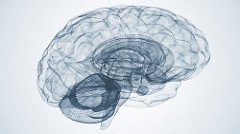
    Wireframe model of the human brain.

    ve even changed.

    “What it steals are the things we value most as human beings. The desire to tell our family we love them, the ability to control our behavior, the very essence of who we are-our personality,” said Susan Dickinson, executive director of The Association for Frontotemporal  Degeneration, a national nonprofit organization based in Pennsylvania.

    Experts estimate that many more may suffer from the disease but have not yet received a correct diagnosis. Which means there could be people walking around with the disease and don’t even know it. The best that we could do for our loved ones is to be there for them and to help them manage living with this disease and many others invading our bodies. Here’s the link to the article- https://www.theatlantic.com/health/archive/2014/01/a-lesser-known-dementia-that-steals-personality/282661/. For more information about frontotemporal dementia, visit the Association website at www.theaftd.org.

  • The Importance of Courage in facing challenges

    Life is filled with an abundant amount of everyday problems and challenges. Each day comes with a whole new set of issues, whether they are health-related, financial-related or anything in between. What is going to help us deal with these daily challenges? While having a good support system in family and friends is vital, here’s why having courage is just as important.
    Courage gives you the confidence to take action in spite of your fears. By developing this quality called courage, you will be facing your fears, worries

    There’s no mountain too big to climb if you have courage

    and challenges like a lion. So whether you’re dealing with a devastating illness, financial setbacks or a loss of a loved one, you can’t deal with these tests in your life without courage. Think of these tests as “Goliaths” in your life which you are willing to stand up against.

    Courage could be strengthened through hope to overcome your adversities. Hope is like an anchor that steers us afloat. If you don’t have any hope for something, it will be difficult to develop this courage inside of us. Serious illness such as cancer and Alzheimer’s are certainly wearing people down physically. But if you continue to remain hopeful in managing these illnesses, you will gain courage in your fight against them.

    Yes, courage is a vital thing to have to face any adversity or challenge. Where do you get your courage? For me, the true source of my courage comes from my dear father, Jehovah. My relationship with him has strengthened me in so many ways. That’s why I named my blog, “Good News for the Soul.” I wanted to impart some words of encouragement and hope for anyone dealing with a seemingly overwhelming physical turmoil in their lives. But as long as you have courage, no weapon formed against you will have any success.

  • Pause and Reflect- What gratitude can do for your well-being

    I was looking at a very interesting public discourse on my tablet today. This discourse talked about the importance of expressing gratitude in our everyday lives. Today’s world is bombarded with so many problems, anxieties and worries. But if more people “paused and reflected” on the precious things of life, we will have more gracious people in this world.

    Show gratitude for being able to wake up alive and well. There are so many diseases and ailments impacting people today. Cancer

    Sometimes we have to pause and reflect on the little things that make us smile.

    , diabetes, and various mental diseases are ravaging their health and well-being. One of these diseases is ravaging my aunt’s health today. That is why it’s important to never take life for granted. Go outside and smell the wonders of nature. Life is truly precious and something we should truly take care of.

    Show gratitude for having a family that cares. Think about the many foster children and homeless people without a roof over their heads. Aren’t you thankful to have loving family members and friends who are there for you when you need them? You may have your ups and downs with them, but when the going gets tough, be thankful you’re not alone in this world. They are also precious gems for us to hold onto.

    Lastly, show gratitude for all the little things in life that make you smile. Sometimes you can’t take life so seriously. Laugh and crack jokes with your family and friends. It’s even okay to laugh at yourself from time to time. Put together a photo collection. Dance to your favorite song. These are just some examples of things in life that make us smile. Life is precious but too short to not do any of them.

    So show gratitude for just waking up alive and being able to smell the roses. Show gratitude for having loved ones who have your back. Show gratitude for anything in life that makes you smile. Put that tech device down and take a moment to pause and reflect.

close

Get my Two Watercolor Eucalyptus Thank you Cards sent to your inbox!

Verified by MonsterInsights